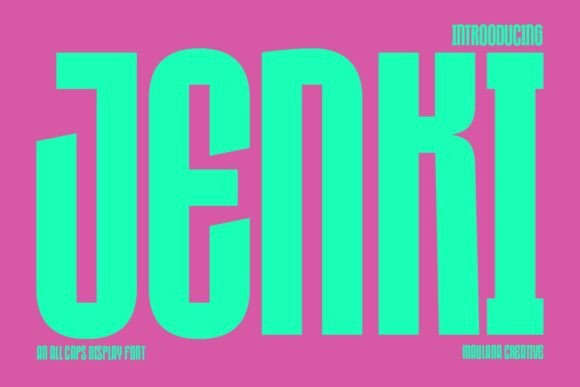
JENKI: A FRESH, FUN, AND FLEXIBLE FONT FOR CREATIVE PROJECTS
If you're looking for a font that adds energy and personality to your designs, Jenki is a strong contender. This all-caps sans serif display font offers a unique blend of modernity and playfulness, making it ideal for a variety of creative applications. With its medium consistent stroke and subtle ligatures, Jenki brings a sense of rhythm and style that can elevate any project.
What Makes Jenki Stand Out
Jenki isn't just another sans serif font—it's designed with a distinct character that sets it apart. The font's clean lines and balanced proportions make it easy on the eyes, even when used in longer text. Its fun, slightly quirky feel makes it perfect for projects that need a bit of flair without being overwhelming. Whether you're working on a logo, a social media post, or a movie title, Jenki can add that extra touch of visual interest.
The medium stroke of Jenki ensures that it remains legible at various sizes, which is especially useful when designing for different platforms. Its subtle ligatures add a layer of sophistication, giving the font a more polished look without sacrificing its playful nature. This balance between simplicity and character is what makes Jenki so versatile.
Real-World Applications of Jenki
One of the most common uses for Jenki is in logo design. Its bold, all-caps style makes it an excellent choice for brands that want to convey confidence and creativity. Whether it's a tech startup, a fashion label, or a local business, Jenki can help create a memorable visual identity. Its clean lines also work well with other design elements, allowing it to fit seamlessly into a broader brand strategy.
Social media is another area where Jenki shines. Platforms like Instagram, Twitter, and TikTok often rely on eye-catching text to stand out in a crowded feed. Using Jenki for captions, headlines, or profile names can help your content grab attention and reflect a cohesive aesthetic. It’s particularly effective for posts that aim to be both professional and approachable.
Movie and book titles are another popular use case for Jenki. The font's dynamic appearance can add a sense of excitement and drama, making it a great choice for titles that need to command attention. Whether it's a short film, a novel, or a podcast, Jenki can help set the tone and create a lasting impression.
Who Benefits from Using Jenki?
Designers, marketers, and content creators are among the primary users of Jenki. For designers, it's a tool that can help differentiate their work and add a unique visual element. Marketers can leverage Jenki to create more engaging campaigns, while content creators can use it to enhance the visual appeal of their posts and videos.
Business owners and entrepreneurs may also find value in using Jenki. Whether they're building a brand, launching a product, or creating promotional materials, the font can help them communicate their message more effectively. Its versatility means it can be used across multiple mediums, from websites to print materials.
Students and hobbyists who are exploring typography can also benefit from Jenki. It provides a great opportunity to experiment with different styles and see how a single font can impact the overall look and feel of a design. For those just starting out, Jenki offers a solid foundation for understanding how typography influences visual communication.
Considerations Before Using Jenki
While Jenki is a powerful font, it's important to consider how it will be used before incorporating it into a project. One key factor is readability. Although the font is legible in most cases, it may not be the best choice for long blocks of text. For extended reading, it's often better to pair Jenki with a more traditional serif or sans serif font to ensure clarity and comfort.
Another consideration is the context in which the font will be used. Jenki's playful nature may not be appropriate for every situation. For example, it might not be the best choice for formal documents, legal texts, or academic papers. However, in more casual or creative environments, its energy and style can be a major asset.
It's also worth noting that the availability of Jenki can vary depending on the platform or software being used. Some design tools may require specific licenses or downloads to access the font. Before using it in a project, it's a good idea to check compatibility and ensure that it's available in the necessary formats.
How to Make the Most of Jenki
To get the best results with Jenki, start by experimenting with different sizes and weights. While the font is designed for all caps, adjusting the spacing and size can help it fit different design needs. For example, using a larger size for headings and a smaller one for subheadings can create a more dynamic layout.
Pairing Jenki with other fonts can also enhance its effectiveness. Combining it with a serif font like Georgia or Times New Roman can create a contrast that draws attention to key elements. Alternatively, pairing it with a minimalist sans serif like Helvetica or Arial can produce a clean, modern look that's both professional and stylish.
Finally, don't be afraid to use Jenki in unexpected ways. Its flexibility allows it to work in a wide range of contexts, from digital to print. Whether you're designing a poster, a website, or a personal project, Jenki can add a fresh and exciting dimension to your work.